

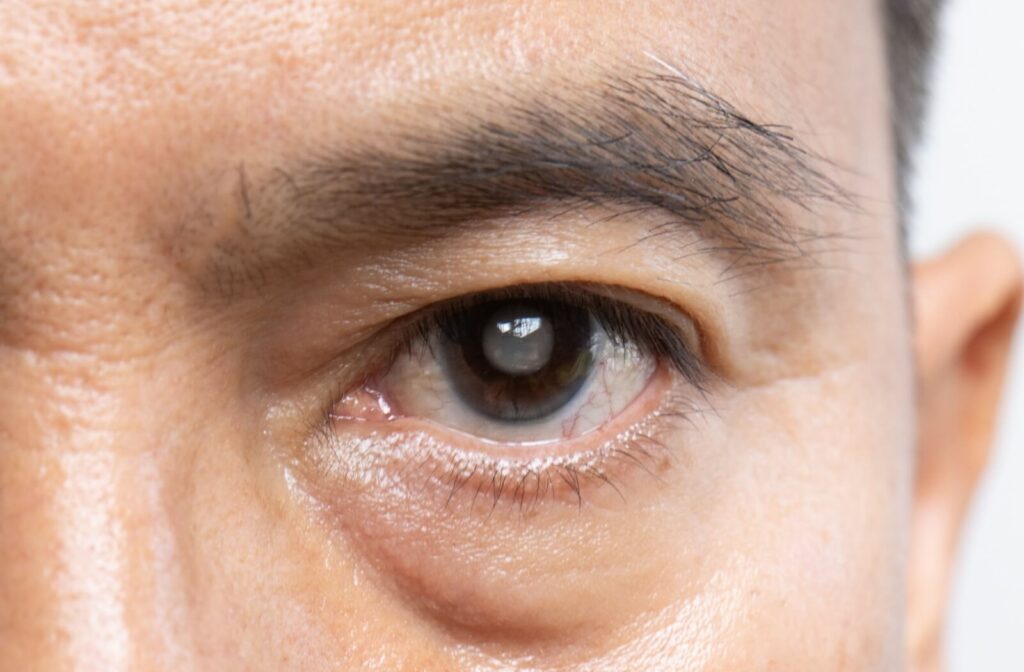
You might notice that the world doesn’t look as sharp or colorful as it once did. It’s a subtle shift at first—maybe the streetlights seem to have halos at night, or you need an extra lamp to read. This experience can be confusing, but the skilled doctors at Cherry Creek Eye Physicians & Surgeons can help you understand these changes.
This change often occurs when proteins in your eye’s lens begin to break down and clump together, forming a cataract. Over time, these clumps can grow larger, making it more difficult for light to pass through the lens clearly, which is why your vision may seem foggy or muted.
How a Cataract Forms & Affects Your Vision
Think of the lens in your eye like a clear camera lens that focuses light to help you see. For it to work correctly, it needs to be transparent. A cataract develops when the natural proteins in the lens begin to break down and cluster together, creating small, opaque spots.
As these protein clumps expand, they scatter the light entering your eye rather than focusing it cleanly, creating the effect of looking through a dusty or fogged-up window. Your vision can become blurry, and the vibrant colors you’re used to may start to look faded.
Common Types of Cataracts
Cataracts can form in different parts of the lens. The location often determines the specific vision problems you experience. You can learn more about the three common types—those that affect the center of the lens, those that form at the edge, and others that start at the back of the lens.
Noticeable Changes in Your Eyesight
Because cataracts usually develop slowly, the changes to your vision can be gradual. You might not realize anything is different at first. As they progress, however, you may begin to notice specific signs, such as:
- Cloudy, blurry, or dim vision
- Colors that appear faded or yellowed
- Increased difficulty with vision at night
- Halos or glare appearing around lights
- A frequent need to change your glasses prescription
If these symptoms sound familiar, scheduling regular comprehensive eye exams is a good way to monitor your eye health.
Factors That Increase Your Risk
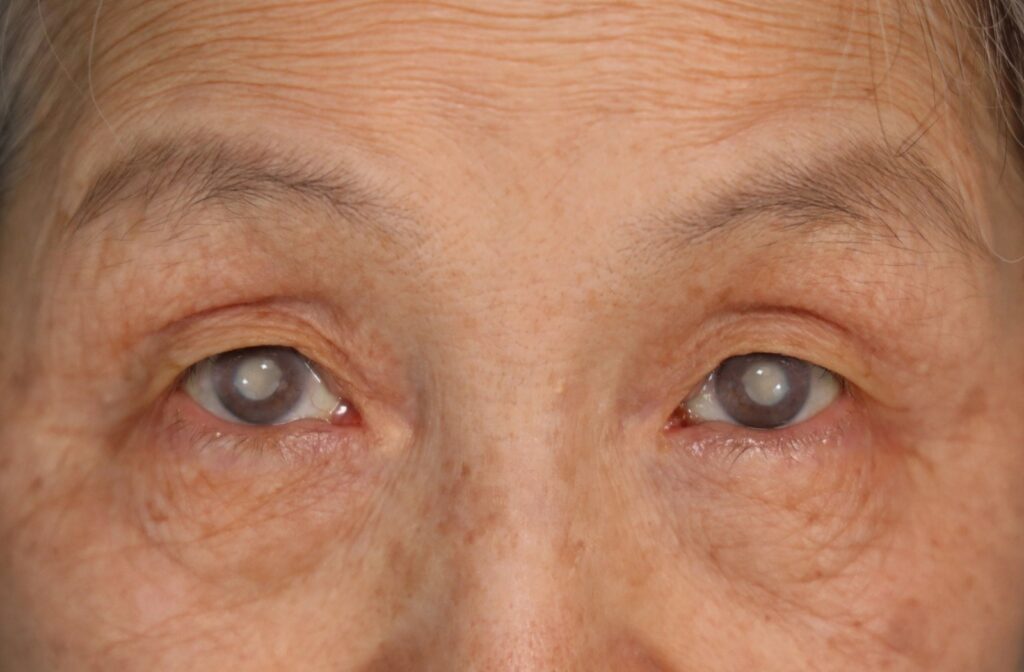
While anyone can develop a cataract, certain factors can increase the likelihood. Age is the most common contributor, as the proteins in the lens naturally change over the years. Your vision can also be affected by your family’s history and long-term exposure to the sun’s ultraviolet (UV) light.
Certain health conditions, such as diabetes, can also affect how quickly cataracts develop. Lifestyle habits are also important; smoking can increase your risk of developing eye conditions.
How to Support Your Eye Health
You can take simple, proactive steps to care for your eyes. Wearing sunglasses that block UVA and UVB rays helps protect your eyes from sun exposure when you’re outdoors. A balanced diet with fruits and leafy green vegetables also supports good eye health.
Regular check-ups are also important for monitoring your vision. Scheduling a comprehensive exam with an Eye Doctor in Denver allows for a thorough assessment of your eye health and helps track any changes over time.
Your Options for Clearer Vision
In the early stages, vision changes from a cataract may be managed with simple adjustments. A new glasses prescription can sometimes help sharpen your sight, and using brighter lights for reading or close-up tasks can make a difference in your daily life.
If your vision affects your ability to do the things you enjoy, cataract surgery is a procedure to consider. During the surgery, the cloudy lens is removed and replaced with a new, clear artificial lens, restoring clear vision.
Understanding your eye health is the first step toward maintaining clear, comfortable vision. If you have questions about your eyesight, the team at Cherry Creek Eye Physicians & Surgeons is here to help. Schedule a consultation to discuss your vision and learn more about your options.